Japanese Names – Meaning, Trends & How To Choose?
Choosing a name is a deeply emotional act — it’s the first gift parents give to their child and one that lasts a lifetime. In Japan, a name isn’t just a label; it’s a story, a blessing, and a wish. Japanese names blend sound, symbolism, and cultural tradition to form something truly special. Whether you’re honoring Japanese heritage, inspired by anime, or drawn to the elegant flow of Japanese characters, each name carries a unique charm and meaning.
From Japanese names with meaning that reflect nature and virtues to special Japanese names that stand out for their creativity, Japanese naming traditions are as rich and layered as the culture itself. This guide explores everything from Japanese 1st names and surnames to gender neutral names, helping you uncover the perfect choice for your little one.
The Essence Of Japanese Names
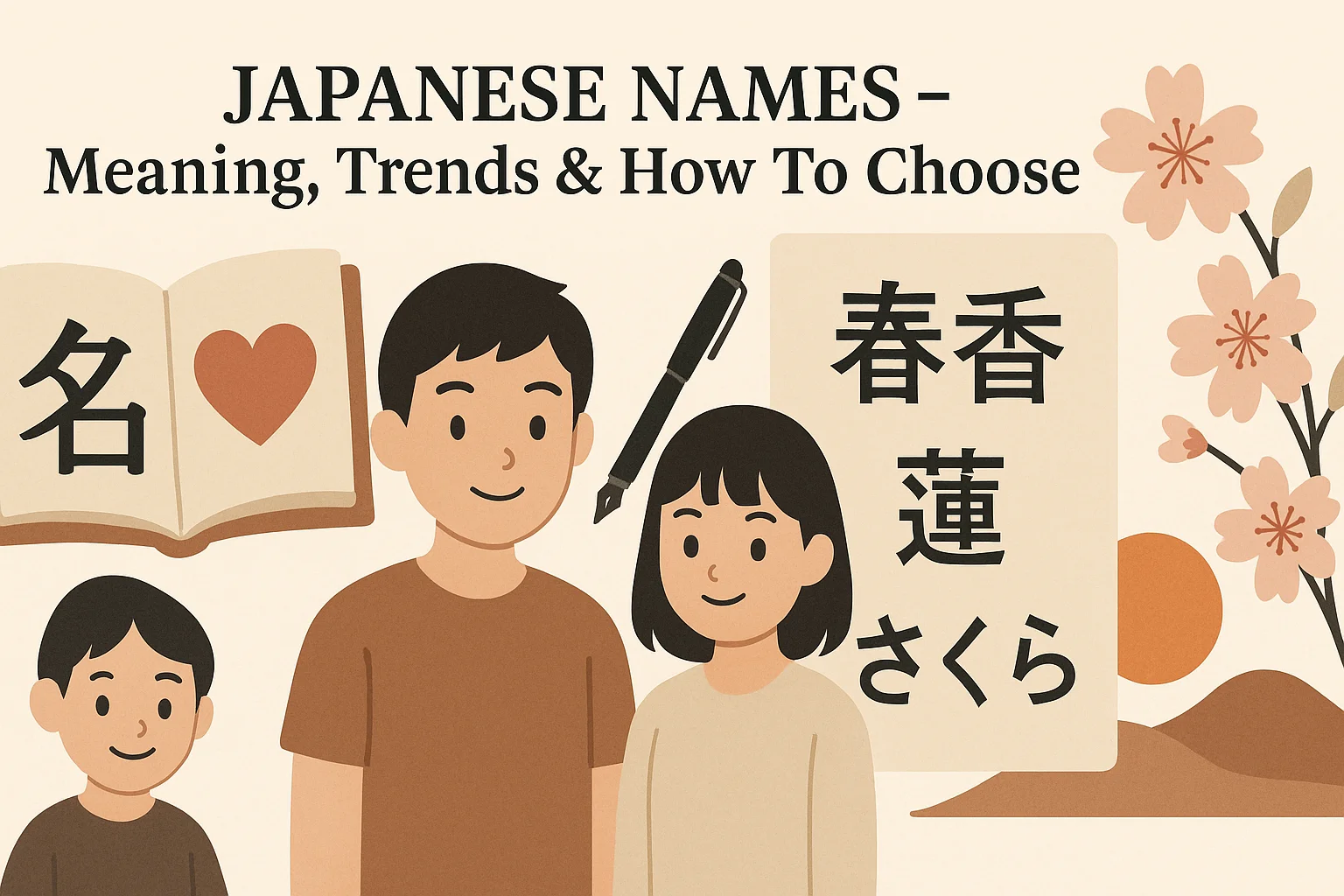
In Japan, names carry profound significance. The kanji (Chinese characters) used to write them aren’t just letters — they symbolize values, elements, and aspirations. A single name can have dozens of variations depending on which kanji are chosen. For example, “Haru” could mean spring, sunlight, or clear weather, depending on the characters used.
Parents carefully select each kanji to reflect hopes for their child’s life — courage, beauty, kindness, or success. This makes Japanese names meaning deeply personal and symbolic.
How Do Japanese Names Work?
Japanese names have a unique style that feels simple on the surface but carries a lot of meaning beneath it. They usually start with the family name first, followed by the given name, and each part is written using kanji characters that hold their own meanings.
Because of this, a single name can express nature, personality, hopes, or even family traditions. The way names are chosen and used in Japan reflects respect, culture, and a deep sense of identity—making the naming system both beautiful and fascinating to explore.
Kanji, Hiragana & Katakana
- Kanji – characters borrowed from Chinese, each with meaning and multiple possible readings.
- Hiragana – Japanese phonetic script, smooth & flowing.
- Katakana – Japanese phonetic script often used for foreign words or emphasis.
For example, the name Himari can be written as 陽葵 in kanji, ひまり in hiragana, or ヒマリ in katakana.
For example, “Tanaka Haruto” (田中陽翔) — “Tanaka” is the japanese last name, and “Haruto” is the given name. Unlike in Western cultures, Japanese middle names are not traditionally used.
However, some modern or international families have started blending naming systems, creating Japanese full names that balance tradition and modernity — for example, “Haruto James Tanaka” or “Sakura Mei Johnson.”
The Beauty Of Kanji And Name Meanings
Each kanji has its own meaning and visual beauty. The choice of kanji can make the same-sounding name look and mean entirely different things. Parents sometimes combine nature-based kanji with virtue-related ones — for example:
| Name | Kanji | Meaning |
| Akari | 灯 / 明里 | Light, Brightness |
| Ren | 蓮 | Lotus, purity |
| Haruto | 陽翔 | Sunlight, flight |
| Yuna | 優奈 | Kindness, gentle greens |
| Sora | 空 | Sky, freedom |
This connection between language, meaning, and aesthetics makes them both poetic and personal.
Popular Japanese First Names
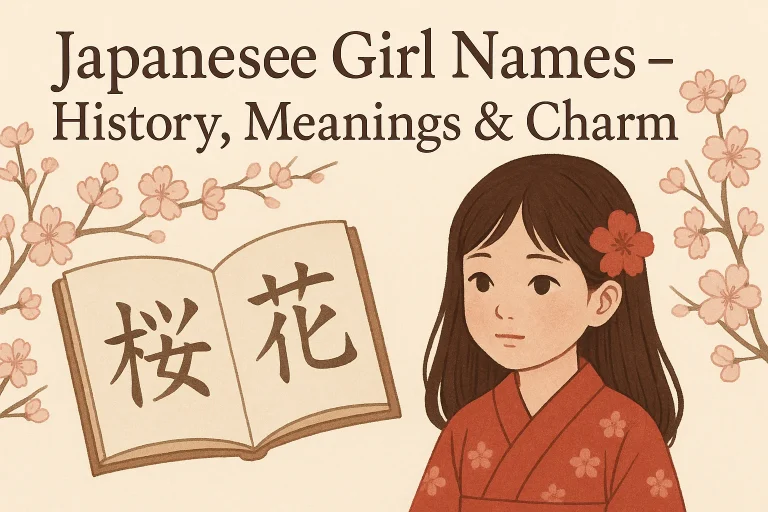
Here is the list of some popular Japanese names for girls:
For Girls :
Japanese girl names often reflect grace, natural beauty, and tranquility. Here are some timeless and modern choices:
- Aiko (愛子) – “Beloved child.” A name full of warmth and affection, often chosen to express deep parental love.
- Hana (花) – “Flower.” One of the most cherished names, representing life, purity, and feminine grace.
- Yuna (優奈) – “Gentle and kind.” Soft, peaceful, and full of compassion — a modern favorite in Japan.
- Sakura (桜) – “Cherry blossom.” The essence of Japanese beauty, symbolizing renewal and the fleeting beauty of life.
- Reiko (玲子) – “Lovely child.” Reflects charm, creativity, and a refined, musical quality.
- Sayuri (小百合) – “Small lily.” Graceful and delicate, symbolizing purity and innocence.
- Hinata (日向) – “Facing the sun.” Cheerful, bright, and optimistic—perfect for a radiant little girl.
- Emi (恵美) – “Blessed beauty.” Represents kindness, fortune, and elegance.
- Akari (灯) – “Light” or “brightness.” A warm, glowing name symbolizing hope and positivity.
- Himari (陽葵) – “Sunflower.” A trending name in Japan that radiates cheer and vitality.
- Kaori (香織) – “Fragrance” or “woven scent.” Evokes beauty and a gentle, soothing presence.
- Ayaka (彩香) – “Colorful fragrance.” A poetic name that suggests artistic and emotional depth.
- Kiyomi (清美) – “Pure beauty.” Symbolizes innocence, elegance, and inner clarity.
- Haruka (遥香) – “Distant fragrance.” Represents peace, grace, and a calm spirit.
- Rin (凛) – “Dignified.” A short yet powerful name that captures strength and beauty.
- Miyu (美夢) – “Beautiful dream.” Perfect for parents who wish for their child to grow up surrounded by beauty and imagination.
- Mei (芽依) – “Sprouting affection.” Reflects growth, care, and love.
- Natsumi (夏美) – “Summer beauty.” Evokes warmth, sunshine, and energy.
- Kohana (小花) – “Little flower.” Sweet and gentle, perfect for a delicate personality.
- Nozomi (望) – “Hope” or “wish.” Represents aspiration, positivity, and future dreams.
- Rika (理香) – “Reason and fragrance.” Reflects intelligence balanced with grace.
- Chihiro (千尋) – “Thousand questions” or “great depth.” Popularized by Studio Ghibli’s Spirited Away, symbolizing curiosity and discovery.
- Ayumi (歩美) – “Walking beauty.” A name that implies progress, elegance, and grace in motion.
- Haruna (春菜) – “Spring greens.” Represents growth, renewal, and connection with nature.
- Sayaka (清香) – “Clear fragrance.” A name tied to purity, brightness, and positivity.
- Yukina (雪菜) – “Snowy greens.” Suggests calmness and beauty even in cold times — a poetic winter choice.
- Riko (莉子) – “Jasmine child.” Combines sweetness and floral beauty.
- Hikari (光) – “Light.” Symbolizes brightness, hope, and inspiration.
- Arisa (有紗) – “Possessing silk.” Elegant and refined, with a timeless charm.
- Miyuki (美幸) – “Beautiful happiness.” Represents joy, prosperity, and grace.
- Tsubaki (椿) – “Camellia.” Symbol of love and admiration, often tied to elegance in Japanese tradition.
- Yuri (百合) – “Lily.” Represents purity, love, and devotion.
- Ami (亜美) – “Second beauty.” Unique and charming, perfect for a creative soul.
- Nanami (七海) – “Seven seas.” Symbolizes freedom, adventure, and vastness.
- Harumi (春美) – “Spring beauty.” Signifies rebirth, youth, and new beginnings.
- Emiko (恵美子) – “Blessed and beautiful child.” A classic name that balances tradition and grace.
- Momoka (桃花) – “Peach blossom.” Symbolizes sweetness, charm, and early spring.
- Kohana (小花) – “Little flower.” Simple yet deeply affectionate.
- Airi (愛莉) – “Love and jasmine.” Represents gentle love and grace.
- Yoko (陽子) – “Child of the sun.” Reflects brightness, warmth, and optimism.
- Rina (里奈) – “Village greens” or “jasmine.” A sweet and popular name with natural charm.
- Mika (美香) – “Beautiful fragrance.” Symbolizes elegance and serenity.
- Tomoyo (智世) – “Wise world.” Represents intelligence, foresight, and compassion.
- Sayumi (小弓) – “Little bow.” Gentle yet strong — evokes balance and harmony.
- Yume (夢) – “Dream.” Simple, romantic, and full of imagination.
- Aina (愛菜) – “Love and greens.” A modern, nature-inspired name symbolizing growth and care.
- Fuyuko (冬子) – “Winter child.” Poetic and serene, perfect for a baby born in winter.
- Reina (怜奈) – “Wise beauty.” Elegant and intelligent.
- Suzu (鈴) – “Bell.” Symbolizes sound, joy, and purity.
- Kairi (海里) – “Ocean village.” Evokes coastal calm and connection to nature.
- Misaki (美咲) – “Beautiful bloom.” Bright and charming, reflecting the beauty of life.
For Boys :
Japanese boy names often represent strength, honor, and aspiration:
- Haruto (陽翔) – “Soaring sunlight.” One of the most popular modern names, symbolizing warmth, brightness, and freedom.
- Takumi (匠) – “Skilled artisan.” Reflects craftsmanship, talent, and dedication to excellence.
- Ren (蓮) – “Lotus.” Represents purity and calmness, as the lotus blooms beautifully even in muddy water.
- Isamu (勇) – “Courage.” Denotes bravery, resilience, and strength of spirit.
- Hiroto (大翔) – “Great flight.” Conveys ambition and the ability to rise above challenges.
- Riku (陸) – “Land.” Symbolizes stability, grounding, and connection to the earth.
- Satoshi (聡) – “Wise.” Reflects intelligence, insight, and clarity of mind.
- Daiki (大輝) – “Great radiance.” Suggests brilliance, confidence, and success.
- Haru (陽) – “Sunlight” or “spring.” Represents warmth, renewal, and hope.
- Tsubasa (翼) – “Wing.” Symbolizes freedom, imagination, and the courage to dream big.
- Kaito (海翔) – “Ocean flight.” A beautiful combination of sea and sky, representing vastness and ambition.
- Ryota (涼太) – “Refreshing greatness.” Associated with strength and calmness.
- Yamato (大和) – “Great harmony.” A timeless name symbolizing peace, tradition, and unity.
- Akihiro (明宏) – “Bright and broad.” Reflects intelligence, openness, and expansive vision.
- Masato (正人) – “Righteous person.” Represents integrity, honesty, and leadership.
- Hikaru (光) – “Light” or “radiance.” Signifies clarity, inspiration, and positivity.
- Kenta (健太) – “Healthy and strong.” Represents vitality and energy.
- Sho (翔) – “To soar.” A modern and uplifting name tied to ambition and freedom.
- Takeru (武) – “Brave warrior.” Symbolizes courage, discipline, and heroism.
- Ryusei (流星) – “Shooting star.” A dynamic name that represents brilliance and fleeting beauty.
- Eito (瑛翔) – “Precious flight.” A modern favorite blending luxury and ambition.
- Arata (新) – “Fresh” or “new.” Represents renewal, creativity, and open-mindedness.
- Naoki (直樹) – “Honest tree.” Symbolizes sincerity, truth, and inner strength.
- Jun (純) – “Pure.” Reflects innocence, integrity, and clarity of heart.
- Hayato (隼翔) – “Falcon” or “swift.” Represents agility, courage, and strength.
- Keisuke (圭介) – “Precious helper.” Conveys compassion and reliability.
- Haruya (陽哉) – “Radiant harmony.” Represents peace and optimism.
- Rento (蓮翔) – “Lotus in flight.” Combines serenity and aspiration.
- Taiga (大河) – “Great river.” Symbolizes power, endurance, and the flow of life.
- Yuuto (優翔) – “Gentle flight.” Represents kindness and elevated spirit.
- Renjiro (蓮次郎) – “Second lotus son.” A name rooted in purity and lineage.
- Hiroshi (浩) – “Generous” or “prosperous.” Reflects abundance and open-heartedness.
- Makoto (誠) – “Truth” or “sincerity.” A classic Japanese name associated with honesty and loyalty.
- Ryuu (竜) – “Dragon.” Represents strength, wisdom, and good fortune.
- Takashi (隆) – “Noble” or “prosperous.” Symbolizes achievement and high standing.
- Toshio (俊雄) – “Talented hero.” Conveys leadership and inspiration.
- Minato (湊) – “Harbor.” Symbolizes safety, connection, and community.
- Akio (昭夫) – “Bright man.” Reflects wisdom and charisma.
- Nobu (信) – “Faith” or “trust.” Represents reliability and confidence.
- Yuki (勇気) – “Courage.” A gentle yet powerful name signifying bravery and resolve.
- Kouki (光輝) – “Radiant light.” Symbolizes hope, optimism, and positive energy.
- Daigo (大悟) – “Great enlightenment.” Represents spiritual wisdom and insight.
- Ryohei (涼平) – “Calm and even.” Evokes balance and composure.
- Kenji (健司) – “Strong and rule.” Reflects leadership and health.
- Tomo (友) – “Friend.” A simple, heartfelt name that embodies connection and kindness.
All the Japanese 1st names blend poetic imagery with admirable qualities, creating a perfect harmony between meaning and sound.
Unique And Rare Japanese Name
If you’re looking for something that feels truly distinctive, these unique japanese names are rare yet beautiful — ideal for parents who want their child’s name to stand out while still carrying deep meaning:
- Kaien (海遠) – “Distant sea,” representing vastness and peace.
- Aokirō (青輝郎) – “Bright hero,” symbolizing courage and light.
- Fuyuko (冬子) – “Winter child,” cool and serene.
- Tsubaki (椿) – “Camellia,” symbolizing love and loyalty.
- Rento (蓮翔) – “Lotus soaring,” blending purity and ambition.
- Airi (愛莉) – “Love jasmine,” soft and tender.
- Minori (実里) – “Harvest,” representing abundance and success.
These names reflect the creativity and poetry at the heart of Japanese naming traditions.
Gender Neutral Japanese Names
Many modern parents love the flexibility of Japanese gender neutral names. They’re elegant, easy to pronounce internationally, and often have nature-inspired meanings:
- Aoi (葵) – “Hollyhock” or “blue,” fresh and soothing.
- Sora (空) – “Sky,” representing freedom.
- Ren (蓮) – “Lotus,” pure and balanced.
- Akira (明) – “Bright, clear,” representing wisdom.
- Haru (春) – “Spring,” symbolizing renewal.
- Mizuki (瑞樹) – “Beautiful moon,” graceful and peaceful.
- Kaoru (薫) – “Fragrance,” poetic and soft.
In an increasingly global world, these names work beautifully across cultures and genders.
Japanese Last Names And Their Meanings
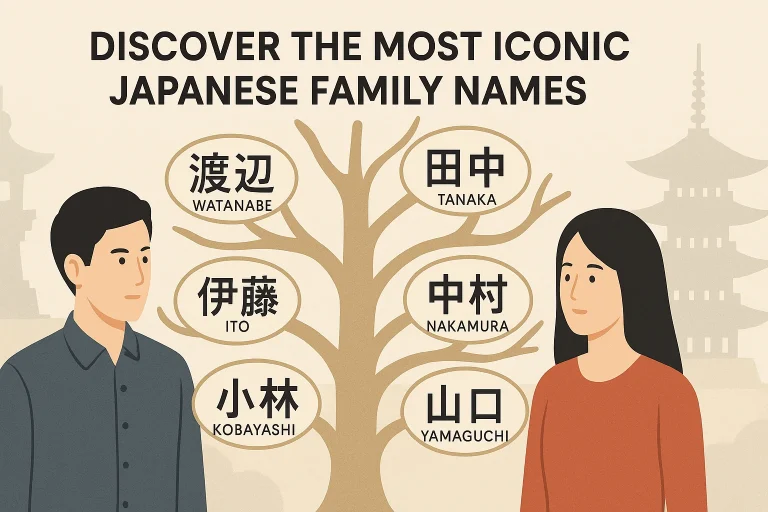
Family names in Japan often originate from geography — mountains, rivers, fields, and forests. Each carries meaning tied to the land and ancestry. Here are some of the most common japanese last names with meaning:
| Surname | Kanji | Meaning |
| Tanaka (田中) | Rice field + middle | “In the rice field” |
| Sato (佐藤) | Assist + wisteria | “Helper of wisteria” |
| Suzuki (鈴木) | Bell + tree | “Bell tree” |
| Takahashi (高橋) | High + bridge | “High bridge” |
| Watanabe (渡辺) | Cross + edge | “At the crossing” |
These surnames represent history, humility, and deep family roots.
Short And Uncommon Last Names
Some families have short japanese last names or regional names that sound distinct and modern. Examples include:
- Ono (小野) – “Small field.”
- Kato (加藤) – “Increase wisteria.”
- Endo (遠藤) – “Distant wisteria.”
- Hayashi (林) – “Forest.”
If you’re looking for un-common japanese last names, consider:
- Kurogawa (黒川) – “Black river.”
- Fujikawa (藤川) – “Wisteria river.”
- Harukawa (春川) – “Spring river.”
Adding these rare surnames can make any list of Japanese last names more fascinating and diverse.
Japanese Nicknames And Modern Adaptations
Japanese people often don’t use nicknames as freely as in Western cultures, but among close friends or family, short forms and affectionate variations are common. For instance:
- Haruto → Haru
- Yuna → Yuyu
- Takumi → Taku
- Sakura → Saku
Some Japanese nick-names and nicknames with meaning come from personal traits or favorite things rather than just abbreviations — showing warmth and individuality.
Modern Japanese youth may also adopt nicknames inspired by anime, manga, or English sounds, creating a bridge between cultures.
Nicknames, Middle Names & Full Name Combinations
Here are a list of Japanese Nicknames, Middle Names and full names combination:
Japanese Nicknames
In Japanese culture, nicknames are less formal but still common among friends/family. If you use a long or multi-kanji given name, you might use a shorter casual nickname (e.g., “Rin” for “Rinako”). Considering short names and short names with meaning helps the name feel warm and friendly.
Middle Names
While middle names are not traditional in Japan, if you live abroad you may choose to include a middle name. That opens the possibility of pairing a Japanese given name with a different cultural middle name, or vice versa, giving flexibility to your child’s full identity.
Combining into Full Names
A good full name flows well and balances surname + given name + (optional) middle name. Make sure you say it out loud, check initials (in English contexts), check how it shortens, and how it appears in formal documents. That ensures your child enjoys their name instead of having to explain it constantly.
Trends And Statistics – What’s Popular In Japan (2025)?
According to baby-naming data from 2025, nature-themed names continue to dominate both for boys and girls. Here’s a quick look:
| Rank | Boy’s Names | Meaning | Girl’s Names | Meaning |
| 1 | Aho | Blue/teal | Sui | Green-blue (like jade) |
| 2 | Minato | Harbor | Himari | Sunflower, hollyhock |
| 3 | Haruto | Sunlight | Rin | Dignified |
| 4 | Asahi | Morning Sun | Mei | Brightness |
| 5 | Ren | Lotus | Hina | Sun vegetables |
This shows how modern Japanese parents continue to balance tradition with trend, combining kanji beauty and phonetic simplicity.
How To Pick The Perfect Japanese Name?
- Understand the meaning – Research kanji carefully to ensure the chosen characters reflect the qualities you want.
- Keep pronunciation in mind – Choose a name easy for both Japanese and non-Japanese speakers to say.
- Consider balance – Combine the sound and look of your chosen japanese full name (surname + given name).
- Check uniqueness – If you prefer a distinct choice, explore special or uncommon japanese last names.
- Look at symbolism – Names connected to seasons, nature, or virtues carry timeless significance.
Remember: the most beautiful name is the one that feels right to your heart and fits the story you want to tell through your child’s life.
Cultural Reflections On Naming
In Japan, names reflect more than identity — they express family heritage and societal values. Parents believe a good name brings luck, balance, and blessings. The care put into selecting kanji is a symbolic act of love.
Even in modern times, when English-friendly names and global influences shape naming trends, the essence remains unchanged: a name is an expression of hope.
Whether traditional or modern, Japanese-names continue to represent respect, beauty, and harmony — core values of Japanese culture.
Conclusion
A name carries identity, destiny, and meaning — and few cultures express that better than Japan. Japanese names weave together sound, symbolism, and visual poetry through the beauty of kanji. From Japanese start names like Haruto and Sakura to elegant Japanese last names like Tanaka and Watanabe, each name tells a story that connects generations.
For those seeking originality, rare or genderless Japanese-names provide endless creativity, while rare surnames and modern nicknames add character and warmth. Whether you’re naming your baby, writing a character, or simply fascinated by Japanese culture, the world of Japanese naming is one worth exploring — where every word blooms with history and meaning.