Discover The Most Iconic Japanese Family Names
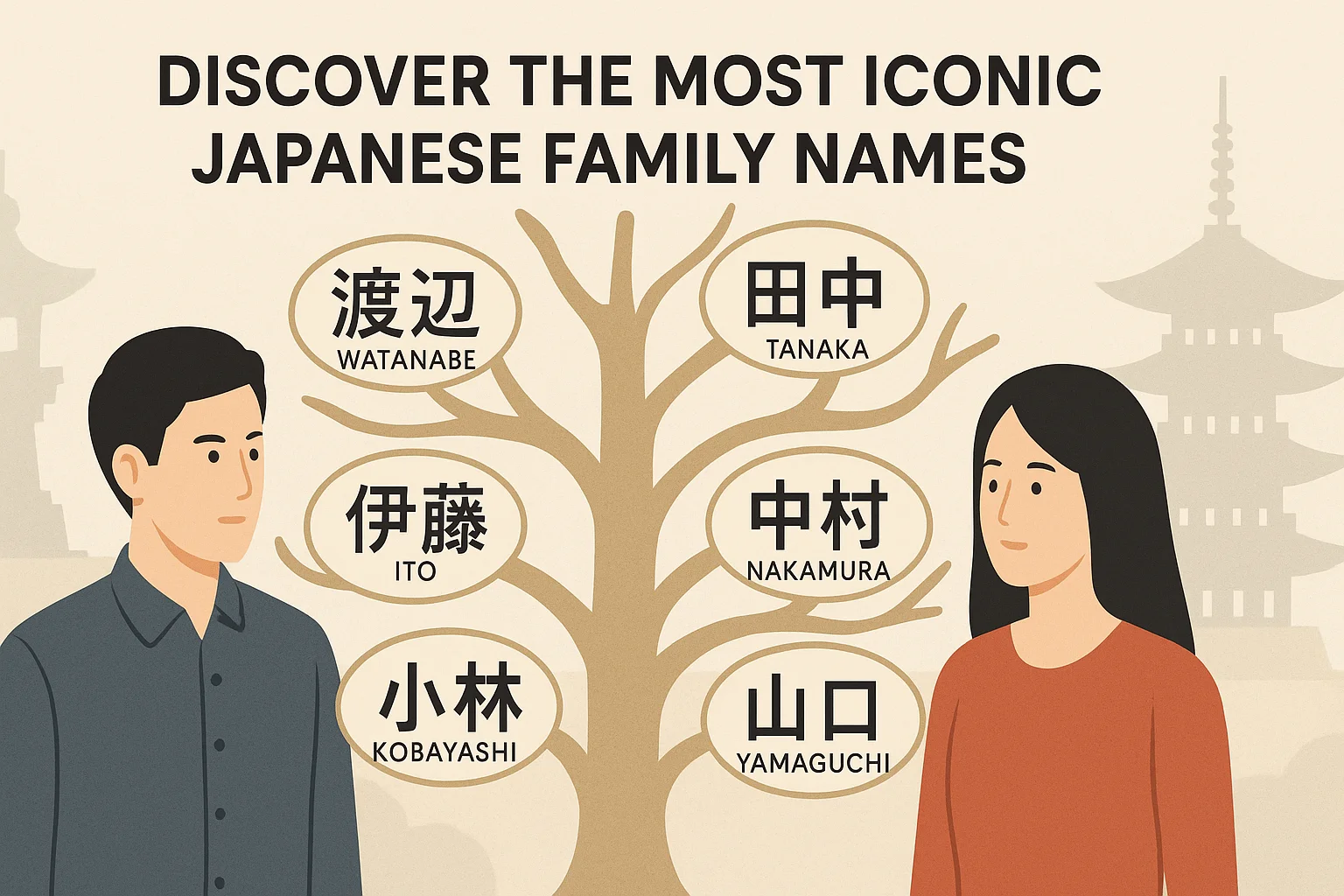
When I first started watching Japanese dramas, I noticed how many characters seemed to share familiar-sounding surnames like Watanabe, Tanaka, and Yamaguchi. At the time, I didn’t realize that Japan draws from a relatively small pool of common family names, especially when compared to Western countries.
Later, as I connected with other J-drama enthusiasts and Japanese language learners, I began to explore how these patterns appear across different shows and how they reflect deep layers of Japanese heritage. My own curiosity grew stronger when I looked into my friend’s last name, trying to understand its meaning and origins, and I was amazed by how much family history can hide in just one name.
A Closer Look At How These Names Developed?
During my studies, I learned that there are an estimated 138,000 Japanese surnames, according to the Enamdict Dictionary of Japanese Proper Names, along with an additional 100,000 family names and nearly 100,000 place names.
Long before that, around 300 B.C., Japanese people began shaping their identity through occupational names, geographical names, and names tied to their clans. This naming system kept growing for almost 600 years, with shared names passed down through birth, marriage, and other familial relations.
Today, when someone tries to trace a common Japanese last name, such as one of the 100 most recognizable ones, they uncover not just a name but a living story shaped by centuries of culture and tradition.
The Most Common Japanese Last Names
As I explored the world of Japanese family names more seriously, I kept noticing how often the same surnames appeared in Japanese dramas and anime, and this repetition made me curious about the deeper patterns behind these ultra-common names in Japan.
I learned that nearly 1 in 10 Japanese people carry one of these names, with Satō becoming so widespread that some even predict a universal reach by 2531. Looking closely at names like Suzuki, Takahashi, Tanaka, Watanabe, Itō, Yamamoto, Nakamura, Kobayashi, and Katō, I found myself drawn to how each one carries layered meanings.
Help, Assistant, Wisteria, Bell, Tree, High, Tall, Bridge, Rice Field, Middle, Inside, Cross Over, Border, Area, This, Mountain, Base, Origin, Village, Small, Forest, and Add. These top ten surnames showed me how an entire cultural history is often held quietly inside a single word.
Common Japanese Surnames & Meanings
As I compared modern usage with traditional meanings, I realized how some common surnames remain connected to their origins even today. Names like Sato, tied to the imperial gardens, or Suzuki, known widely not only through motor vehicles but also through its meaning of bell tree, blend history and daily life.
I found Takahashi, linked to height and bridge, and Tanaka, reflecting a rice field in a village, especially meaningful because of how strongly they echo rural Japan. Meanwhile, Japanese names like Ito, associated with wisteria, and the longstanding chrysanthemum symbol tied to the imperial family, highlight how nature often merges with tradition.
Others such as Watanabe from the Wantanabe clan, carrying the meaning of warrior and edge, Yamamoto connected to mountains, Nakamura combining middle and mura (or village), Kobayashi meaning forest, and Kato meaning increase show how even the most common surnames reflect centuries of cultural history.
Examples Of Popular Surnames With Strong Meanings:
- Nakamura
- Sato
- Takahashi
- Tanaka
- Yamamoto
Very Common Japanese Surnames
As I continued studying Japanese naming patterns, I realized this second tier of names appears just as naturally in everyday Japanese media and daily life, whether in credits, business directories, or long character rolls.
Names like Yamaguchi and Matsumoto always caught my attention, especially because so many of them draw from natural elements—mountains, entrances, pine trees, origins—revealing how deeply the Japanese landscape shapes family identity.
While working with names such as Yoshida, Good Luck, Yamada, Sasaki, Help, Tree, Entrance, Mouth, Inoue, Well, Above, Kimura, Hayashi, Forest, Shimizu, Pure, Water, and Saitō, I noticed how their meanings blend into the cultural rhythm of everyday Japan. They feel familiar now, not just because they’re common, but because they speak so clearly through their imagery.
Less Common But Notable Surnames
As I continued comparing names, I came across surnames that may not be as widely used but still carry distinctive meanings and interesting cultural associations. Names such as Hara, connected to a Plain, or Igarashi, meaning Fifty Storms, stood out to me immediately because of their powerful imagery.
I also found Fukuda, expressing Fortune and Luck, Kawasaki tied to a Cape, Nagata meaning Eternal, Takagi linked to HighTree, Kawai tied to Meet and Join, Shimada connected to an Island, Okamoto representing Hill and Base, and Watabe tied to Part or Section. These names felt unique, almost artistic, and I enjoyed noticing how their imagery differs from the more common surname groups.
Examples Of Notable But Less Common Surnames:
- Watabe
- Igarashi
- Fukuda
- Kawasaki
- Takagi
Uncommon But Culturally Significant
As I reached the surnames that appear less frequently yet carry remarkable cultural depth, I found myself drawn to their almost poetic qualities. These names often show up in fictional characters, literature, film, and television, and each one carries a quiet sense of story.
Names such as Uno, tied to the Universe and Field, or Tachibana, associated with Orange and Mandarin, felt especially vivid. In particular, I found that many Japanese female names complement these surnames beautifully, blending meaning, sound, and cultural nuance to create characters whose identities feel layered and memorable.
Others like Hamaguchi, linked to Beach and Entrance, Minami meaning South, Kishi tied to Shore and Coast, Inagaki representing Rice Plant and Fence, Kubo meaning Long Time and Protect, Tajima tied to Rice Field and Island, Kitamura connected to North and Village, and Akiyama carrying the beauty of Autumn and Mountain, reminded me how even rare names can hold strong cultural resonance. These names feel like small pieces of art within the landscape of Japanese identity.
Examples Of Culturally Significant Uncommon Surnames:
- Tachibana
- Hamaguchi
- Inagaki
- Kitamura
- Akiyama
Common Nature-Related Surnames
The more I explored Japanese family names, the more I saw how deeply reverence for nature influences these surnames, and this group became one of the most fascinating parts of my research. Names like Mori, tied to Forest, and Ikeda, connected to a Pond, instantly bring natural scenes to mind.
Others such as Hashimoto with its link to a Bridge, Ishikawa with Stone and River, and Yamashita meaning Below, reflect a lifestyle once closely tied to the land. I also appreciated how names like Kawaguchi meaning Entrance, Nakajima meaning Island, Aoki representing Blue and Green, Ishida relating to Stone, and Kaneko, expressing Gold and Child, create layers of meaning that feel almost poetic.
These names reminded me again and again that family identity in Japan often grows from the very earth, water, and colors that shaped daily life for generations.
Location And Direction Japanese Surnames
As I moved deeper into the study of Japanese surnames, I became especially interested in families whose names reflected direction and location, because these names gave me a clearer picture of how people once identified themselves by the shrines, landmarks, and spaces where they lived or worked in pre-modern Japan.
Names such as Fujita, carrying the gentle elegance of Wisteria, or Miyazaki, tied to a Shrine and Cape, helped me see how much meaning can be encoded in a simple geographic relationship. Others like Nakano with its link to a Field, Ōno meaning Big, Ōta expressing Fat, Fujioka suggesting a Hill, Ueda meaning Upper, Shimada tied to an Island, Gotō meaning Behind, and Matsuda connected to Pine created a map-like image in my mind.
These names made me realize how closely families once lived on the land.
Examples Of Location-Based Family Names
- Fujita
- Miyazaki
- Nakano
- Ueda
- Shimada
Geographic Feature Surnames
When I began exploring surnames shaped by Japan’s physical environment, I found myself imagining the landscapes that inspired them—mountains, rivers, forests, and fields forming a natural vocabulary of identity. Names like Morita, tied to Forest and Rice Field, or Noguchi, connected to a Field and Entrance, immediately painted images of peaceful countryside life.
Others such as Takeuchi, expressing Inside the bamboo, Andō meaning Peace, Matsui linked to Pine and a Well, Ogawa meaning Small River, Sawada tied to a Marsh, and Ōtsuka meaning Mound, helped me understand how topography shaped the way families identified themselves. These names reminded me of how deeply personal the land once was to those who depended on it daily.
Examples Of Nature-Inspired Geographic Names:
- Morita
- Takeuchi
- Ogawa
- Sawada
- Ōtsuka
Occupation-Related Surnames
Studying Japanese surnames connected to old professions was equally fascinating, because these names reveal how families once expressed identity through traditional occupations, social roles, or even warrior lineage. I learned how names like Nishimura, tied to the West and a Village, or Kojima, meaning Small Island, reflected a community’s structure.
Names such as Kato meaning Add, Maeda meaning Front, Murata, Abe meaning Peace and Multiply, Harada tied to a Plain, Okada linked to a Hill, Hasegawa tied to a Long Valley, and Takeda, associated with Military and Warrior heritage, helped me understand how these surnames once functioned like badges of profession or reputation. Seeing these layers made me appreciate how naming in Japan is often a quiet record of family craft and contribution.
Examples Of Occupation-Related Surnames
- Takeda
- Nishimura
- Kato
- Maeda
- Harada
Nature Inspired Japanese Surnames
As I spent more time exploring the connection between Japanese identity and the natural world, I realized how many surnames grow directly from Japan’s long cultural relationship with nature, mythology, and Shinto rituals. Seeing names like Aoki, tied to blue and green, or Fuji, which appears in extended forms like Fujiwara, Fujimoto, and Fujita, helped me understand how families once identified themselves with symbols of harmony and beauty.
Names such as Hara, meaning tundra or meadow, Ikeda, connected to a cistern or reservoir, Kimura, tied to woods, Kitagawa, referencing north and stream, and Matsumoto linked to pine, all felt deeply rooted in the environment that shaped everyday life.
I also found it meaningful to see names like Mori, Nakajima meaning island, Nishikawa tied to westernriver, Ogawa meaning stream, Saito linked to wisteria, Yamada connected to mountain or rice field, Yamaguchi tied to mountain, and Yoshida, meaning rice paddy, show up again and again. These names reminded me that, in Japan, family identity and the land are rarely separate.
Examples of nature-inspired surnames:
- Aoki
- Fuji / Fujiwara / Fujita
- Kimura
- Matsumoto
- Mori
Cultural Meaning Surnames
As I explored the cultural layers behind Japanese surnames, I noticed that some names carry not just literal translations but deep cultural resonances shaped by historical events, long-respected families, and long-standing practices. Names like Fujimoto, tied to a Base, or Sakamoto, linked to a Slope, felt like subtle reminders of how geography and culture often blend into identity.
Others such as Kondō meaning Near, Tamura tied to a Village, Hirano meaning Flat Field, Nomura, Taguchi with its Entrance, Nakagawa tied to a River, Sugiyama referencing Cedar and Mountain, and Okamoto meaning Hill, showed me how these names quietly reflect values, traditions, and the ways families once understood their place in society.
Studying them helped me appreciate how cultural meaning shapes personal identity in Japan.
Examples Of Culturally Meaningful Surnames:
- Fujimoto
- Sakamoto
- Tamura
- Hirano
- Sugiyama
Historical Significance Surnames
Some Japanese surnames captured my attention because they carried stories that reached far into the past, often connected to powerful clans, historical figures, and significant events that shaped Japan’s development. Names such as Matsushita, meaning Below, and Mizuno, linked to Water, appear in records tracing large family networks.
I found names like Chiba with its image of Thousand Leaves, Ōkubo tied to Long Time and Protect, Doi connected to Earth and Soil, Imai meaning Now, Endō meaning Far, Eguchi tied to an Inlet and Bay, and Ōnishi meaning West, especially rich with historical depth. These names reminded me that Japanese surnames often hold memories of loyalty, social position, and survival across generations.
Examples Of Historically Significant Surnames:
- Chiba
- Ōkubo
- Eguchi
- Endō
- Mizuno
Understanding Japanese Last Name Patterns
While exploring all these surnames, I began noticing clear patterns that helped me understand their meanings more naturally. Many names draw directly from natural features like mountains, rivers, fields, and forests, which explains why so many families seem connected to the land around them.
Others reflect directions—north, south, east, west—or use size descriptors such as small, big, and middle to mark a family’s location or role. And then there are names rooted in plants like pine, bamboo, and wisteria, which often symbolize strength, beauty, or tradition. Seeing these patterns helped me read surnames almost visually, as if each one carried a built-in explanation of its origin.
Examples Of Pattern-Based Surnames:
- Yamada (mountains + rice field)
- Nakamura (middle + village)
- Morita (forest + rice field)
- Kobayashi (small + forest)
- Fujita (wisteria + rice field)
Regional Variations In Japanese Surnames
Finally, as I compared surnames across different parts of Japan, I realized how strongly some names carry regional ties. A name like Gotō appears far more often in western Japan, especially around Kyushu, while others such as Saitō show up more frequently in eastern Japan.
These differences reminded me that Japan’s regions each developed their own cultural and historical identities over time, and surnames became markers of belonging in these areas. Understanding these variations gave me a clearer sense of how families shaped their identities not only by meaning but also by geography.
Examples Of Region-Linked Surnames:
- Gotō (western Japan)
- Saitō (eastern Japan)
History Of Japanese Surnames
As I studied the deeper story behind Japanese surnames, I learned that the naming system began shifting around 250 AD, when different clans gradually formed kingdoms and united under a single ruler. This ruler established family rankings based on societal status, which later became part of the Uji-Kabane system, the foundation for official family names in Japan.
Early kabane titles such as Omi, Muraji, and Tomonomiyatsuko were closely tied to the influential Yamato clan and the early emperor, with each title reflecting important occupations or roles in governance. I found it interesting how these traditions shaped modern naming rules, such as placing the family name first, although people in western countries often switch the order when Romanizing their names.
Learning about kanji, hiragana, and how combinations of characters can change meanings or create different interpretations helped me appreciate the complexity of the naming tradition far more deeply.
Examples Of Historically Rooted Name Elements:
- Omi
- Muraji
- Tomonomiyatsuko
- Yamato
- Kabane
Regional Japanese Last Names
As I compared different regions of Japan, I began to see how geography shaped naming traditions just as strongly as history or culture. Japan’s long and varied landscapes, stretching across a vast country, influenced how communities chose names based on their travel routes, natural surroundings, or local origins.
Names like Endo, meaning distant or far, Furukawa, tied to an old river, and Hashimoto, linked to a bridge, helped me understand how families often marked their place through familiar structures. Others like Hayashi, meaning grove or forest, Hori, connected to a ditch, moat, canal, creek, or inlet, Inoue, tied to town, community, or above, Matsushita, meaning down below, Miura, referring to a seacoast or beach, Nakano, meaning center or field, and Oshima, meaning large island, reflected everyday surroundings in simple but meaningful ways.
These names made me feel the presence of place in a very real, grounded way.
Examples Of Region-Influenced Surnames:
- Endo
- Furukawa
- Hayashi
- Miura
- Oshima
Japanese Names Inspired By Other Cultures
One of the most interesting parts of my research involved surnames shaped by Japan’s interactions with other cultures. Even though Japan remained an egocentric society for centuries and only opened more broadly to the Western world in 1848, its history still contains long exchanges with Asian cultures, especially Korea and China.
Names like Aito, tied to a Chinese constellation and carrying meanings of soar or fly, showed me how symbolism traveled across borders. Others such as Hana, meaning first one in Korean, Jin, meaning truth, Kanei, tied to gold, and Kaneko, linked to the Chinese zodiac and the rat, revealed how migration and cultural blending left meaningful marks on family identity. These names reminded me that Japanese surnames, while deeply traditional, have always been open to influence.
Examples Of Culturally Blended Surnames:
- Aito
- Hana
- Jin
- Kanei
- Kaneko
Conclusion
Exploring Japanese family names gave me a deeper appreciation for how history, culture, and nature come together in everyday life. Whether a name points to a mountain, a village, a trade, or even a moment in ancient history, each one holds a quiet story that has traveled through generations.
As I continued studying these names, I found myself seeing patterns, landscapes, and traditions woven into even the simplest kanji. It reminded me that surnames aren’t just labels—they’re living connections to the past. And in Japan, those connections run wide and deep, carried in names that still shape identity today.