
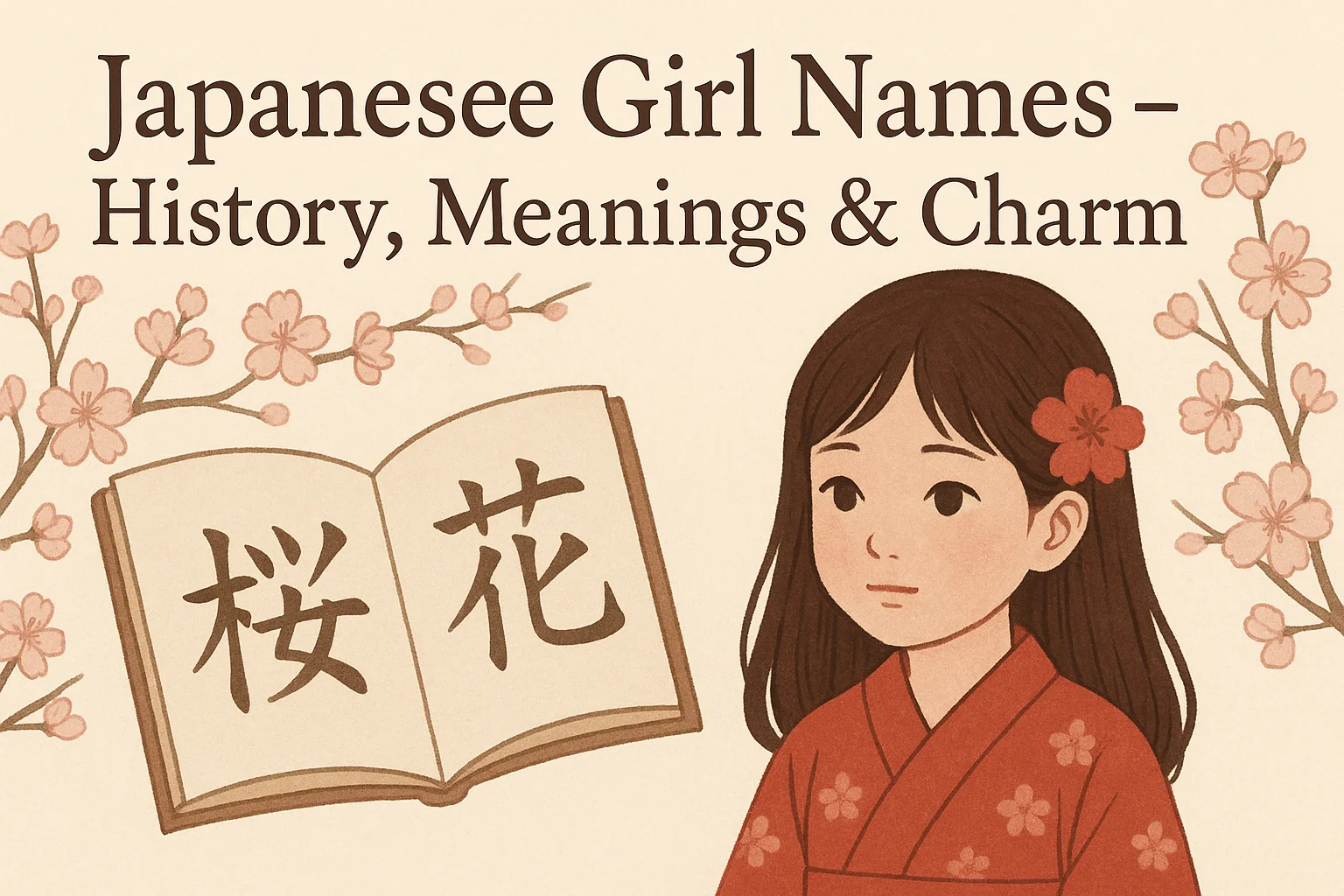
Japanese Girl Names – History, Meanings & And Charm Of Japanese Names
Choosing a name for a baby is both exciting and overwhelming, especially when you’re searching for something meaningful and culturally rich. Japanese culture has always placed enormous importance on names, and each name carries layers of symbolism, emotion, and history.
Whether you’re expecting a baby, creating a story character, or simply fascinated by naming traditions, understanding the beauty behind Japanese naming culture can be genuinely inspiring.
In this guide, we’ll go deep into the history, traditions, meanings, structure, pronunciation, kanji, symbolism, and of course, provide a huge list of cute, aesthetic, rare, popular, and traditional name ideas. Grab a cup of tea—let’s explore a world where names are poetry.
The History Behind Japanese Naming Traditions
Japanese names date back over a thousand years, influenced by Shinto beliefs, seasonal changes, Buddhism, poetry, and nature. Traditionally, girls’ names ended with the suffix -ko, which means “child.” For example:
- Yuriko = lily + child
- Keiko = blessed + child
- Tomoko = wise + child
From the 1960s to the 1980s, names ending in -mi (beautiful) became extremely popular:
- Megumi = blessing + beauty
- Hitomi = beautiful pupil
- Ayami = colorful + beauty
Today, parents often choose shorter, softer names like Mei, Rin, Yuna, Aoi, and Rio.
How Kanji Shapes Meaning?
Kanji isn’t just a writing system—each character holds a meaning. A single name may have 10 or more possible meanings, depending on which kanji you choose.
For example, Hana can mean:
- 花 = flower
- 華 = elegance
- 羽菜 = feather + vegetables
This flexibility lets parents design names that feel personal, symbolic, and unique.
Why Do Japanese Names Carry So Much Meaning?
Japanese names are more than just sounds—they’re tiny messages filled with emotion, symbolism, and hopes for the future.
When parents choose a name, they’re often thinking about the traits they want their daughter to embody as she grows, which is why meanings play such a big role. Here are some of the most common themes behind Japanese names:
Beauty & elegance
Names tied to beauty, grace, and soft feminine qualities are extremely popular. This might include references to flowers, light, or delicate imagery. Parents often choose these names because they want their daughter’s life to be filled with charm, kindness, and inner beauty—not just outer appearance.
Nature & seasons
Japan’s culture is deeply connected to nature, so many names come from the environment around them. Everything from cherry blossoms and autumn leaves to the moon, sea, wind, and rain can inspire a name. These names often symbolize harmony, renewal, or the peaceful feeling that certain seasons bring.
Strength & character
While many Japanese girl names sound soft, the meanings behind them can be surprisingly powerful. Parents may choose names that reflect intelligence, resilience, bravery, or moral strength. These names encourage qualities that will support their daughter throughout life, especially in challenging times.
Hope & future
Modern parents love names that hint at new beginnings—names about dreams, light, future possibilities, or a bright path ahead. These names feel uplifting and are often chosen with the wish that the child grows up with positivity, ambition, and a strong sense of purpose. Japanese Male Names, in particular, often carry these hopeful meanings, combining traditional significance with a modern sense of aspiration.
Japanese Naming Structure
| Element | Meaning | Example |
| Kanji | Characters carrying meaning | 美 (beauty), 海 (sea) |
| Hiragana | Soft, flowing phonetic writing | ひな (Hina) |
| Katakana | Used for foreign-style names | エマ (Ema) |
| Suffixes | Add depth or traits | -ko (“child”), -mi (“beauty”), -ka (“fragrance”) |
Parents often choose a combination that feels poetic and symbolic.
Most Popular Japanese Names For Girls (With Meanings)
These names regularly appear in modern baby name rankings:
| Name | Meaning |
| Himari | sunflower / sunlight |
| Rin | dignified |
| Mei | sprout / beauty |
| Yua | gentle love |
| Mio | beautiful cherry blossom |
| Aoi | hollyhock / blue |
| Koharu | late summer sunlight |
| Hina | sun / light |
Traditional Japanese Female Names (Classic & Timeless)
These carry an elegant, historical feeling:
- Sakura — cherry blossom
- Yuki — snow / happiness
- Haruko — spring child
- Kazuko — harmonious child
- Chiyo — thousand generations
- Fumiko — treasured child
These classics never go out of style.
Cute & Kawaii Style Names (Adorable & Soft)
Here’s a sweet list inspired by soft sounds, nature, and innocence:
- Emi — beautiful blessing
- Koko — stork / childlike sound
- Ruri — lapis lazuli
- Momo — peach
- Yui — bind / gentleness
- Ami — friend / beauty
- Miu — beautiful feather
These are perfect if you love cute Japanese girl names.
Pretty & Aesthetic Name Choices
Soft, elegant, and visually beautiful names:
- Ayaka — colorful flower
- Kaori — fragrance
- Serina — jasmine + village
- Rina — jasmine / melody
- Sayuri — small lily
- Haruna — spring greens
These pretty Japanese girl names feel delicate and poetic.
Unique & Rare Japanese Names (Less Common Choices)
If you’re searching for unique Japanese girl names, consider something with unusual kanji combinations:
- Minato — harbor
- Yaeko — many layers child
- Asana — calm morning
- Tsubame — swallow bird
- Kanon — flower + sound
- Rika — truth / jasmine
- Suzu — little bell
These also count as rare Japanese girl names, perfect for originality.
Strong Names With Deep Symbolism
Not all names are soft—many Japanese female names represent strength, courage, or resilience:
- Shinobu — endurance
- Ayane — brilliant sound
- Mari — truth / reason
- Takara — treasure
- Kiyoko — pure child
- Hikaru — light / radiance
These names reflect powerful values.
Names Inspired by Nature (Flowers, Moon, Water & Seasons)
Japan has always had a deep spiritual connection with nature—every season, flower, wind, and natural element carries symbolism. Because of this, many Japanese Names are inspired by the beauty and power of the natural world. If you love gentle, calming, or poetic names, this category might feel like a perfect fit.
Flower Names
Flowers play a huge role in Japanese culture, especially in art, poetry, and seasonal celebrations. These floral names feel graceful, feminine, and timeless.
- Ayame — iris
- Sumire — violet
- Tsubaki — camellia
- Ran — orchid
- Sakura — cherry blossom
- Hana — flower
- Karin — quince blossom
- Kasumi — mist / floral haze
- Momoka — a hundred flowers
- Riko — jasmine child
- Sayuri — little lily
- Suzuran — lily of the valley
- Haruka — spring blossom
- Airi — jasmine + love
These names capture Japan’s love for delicate blossoms and seasonal beauty.
Water & Ocean Names
Japan is surrounded by the sea, so many Japanese names reflect the power and calmness of water. These names feel refreshing, peaceful, and often symbolic of emotional depth.
- Nami — wave
- Manami — love of the sea
- Minami — south ocean
- Mio — beautiful waterway / cherry blossom channel
- Nagisa — seashore
- Umi — ocean
- Suzu — little bell (but also evokes the sound of water)
- Shizuku — water droplet
- Izumi — spring / fountain
These names carry soft, fluid sounds that feel calming and gentle.
Sky & Light Names
Names inspired by the sky often symbolize freedom, hope, brightness, and clarity. If you love uplifting, airy names, this group might be perfect.
- Sora — sky
- Hikari — light
- Akari — bright light
- Hikaru — shining / radiance
- Aozora — blue sky
- Nozomi — wish (often connected with the sky or hope)
- Koharu — little sun / warm sunlight
- Hinata — sunny place
These names feel breezy, optimistic, and full of brightness.
Moon Names
The moon (tsuki) symbolizes femininity, elegance, mystery, and beauty in Japanese culture. Moon-themed names often feel soft, poetic, and magical.
- Tsukiko — moon child
- Mitsuki — beautiful moon
- Runa — moon / lunar
- Mizuki — moon + hope / auspicious
- Yuzuki — gentle moon
- Tsukasa — moon helper (traditional)
- Kaguya — shining night princess (from the famous moon legend)
These also fit the vibe of aesthetic Japanese girl names.
Seasonal Nature Names
Japan celebrates each season with festivals and traditions, so seasonal names are meaningful and symbolic.
- Haru / Haruna — spring
- Natsumi / Natsuki — summer beauty / summer moon
- Aki / Akiko — autumn / autumn child
- Fuyuko — winter child
- Shizuka — quiet summer (poetic seasonal meaning)
These names beautifully represent the rhythm of nature through the year.
Modern Japanese Baby Girl Names (Trendy & Fresh)
Modern parents love minimalist names:
- Rio — cherry blossom center
- Rei — zero / bell / beauty
- Mira — future
- Lina — jasmine + palm tree (modern hybrid)
- Nayu — soft sound name
These blend traditional and modern elements beautifully.
Nicknames & Middle Name Ideas
Here are some light, cute nicknames for girls based on Japanese sounds:
- Riri
- Koko
- Mimi
- Yuyu
- Nana
Short options work well as Japanese middle names girl, especially when combined with longer first names like Haruna or Ayaka.
40 Beautiful Names & Meanings
| Name | Meaning |
| Airi | love + jasmine |
| Hana | flower |
| Riko | jasmine child |
| Noa | love / affection |
| Minami | south / ocean |
| Rei | spirit / bell |
| Rui | affection |
| Saori | weaving |
| Yuzu | citrus fruit |
| Mio | cherry blossom |
| Megumi | blessing |
| Haruka | distant spring |
| Aika | love song |
| Mei | sprout |
| Akari | light |
| Natsuki | summer moon |
| Hinata | sunflower |
| Yuna | gentle |
| Rina | jasmine |
| Chika | thousand flowers |
| Sumire | violet |
| Asuka | fragrance of tomorrow |
| Keiko | blessed child |
| Tomomi | beautiful friend |
| Misaki | beautiful blossom |
| Ami | friend |
| Ruri | lapis lazuli |
| Wakana | harmony |
| Satsuki | fifth month |
| Koharu | little sunlight |
| Ayano | design + sound |
| Hoshiko | star child |
| Mirai | future |
| Yuina | gentle tie |
| Kaede | maple |
| Suzume | sparrow |
| Yuzuki | gentle moon |
| Nanami | seven seas |
How To Choose The Perfect Name?
Choosing a name isn’t just about picking something that sounds “pretty.” It’s a mix of emotion, culture, meaning, and practicality. If you’re feeling overwhelmed by the number of beautiful Japanese names out there, here’s a more in-depth, step-by-step way to narrow things down and find a name that genuinely feels right.
Decide The Vibe You Want
Start by asking yourself what kind of overall “feeling” you want the name to give. Do you picture something sweet and gentle, like Yui or Hana? Maybe something elegant and timeless, like Sakura or Ayaka? Or perhaps you prefer something bold and strong, like Shinobu or Hikaru?
The vibe of the name matters because it influences how the name is perceived by others and how your child might identify with it as they grow.
Think About The Meaning Behind The Name
Japanese names can change meaning entirely depending on the kanji chosen, which gives you a lot of flexibility. Ask yourself:
- Do you want a name inspired by nature (flowers, sky, seasons)?
- Do you want a name symbolizing beauty or elegance?
- Do you want something that expresses strength, intelligence, or hope?
- Or do you want something associated with love, peace, or kindness?
Meaning adds depth, and many parents love choosing names that reflect qualities they hope their daughter will grow into.
Consider pronunciation—Now And In The Future
A beautiful name should also be practical. Think about how easily the name can be pronounced by:
- Japanese speakers
- Non-Japanese speakers
- Teachers
- Friends
- Family
Shorter names like Rei, Mei, Mio, or Aoi tend to be easy across cultures. Longer names such as Haruka, Sayuri, or Megumi may require more explanation—but they’re also incredibly beautiful.
It’s all about finding a balance that fits your life.
Look At The Kanji Options Carefully
Kanji is where the magic really happens. A single name can have many possible meanings depending on the characters chosen. For example, Mio can mean:
- 美桜 → “beautiful cherry blossom”
- 澪 → “waterway”
- 心愛 → “heart + love” (modern creative style)
When choosing a name, don’t just think about the sound—look closely at:
- the meaning of each character
- how the name looks when written
- how complex or simple the kanji are
Some parents choose simple kanji for readability, while others love more decorative ones.
Imagine The Name At Every Age
This is a step many people forget, but it’s probably the most important. Say the name out loud and picture it on:
- a newborn baby
- a little child
- a teenager
- a professional adult
- an elderly person
Some names feel adorable for kids but may not age well, while others feel strong and mature but may sound too formal for a toddler. A great name feels natural at every stage of life.
Conclusion
Japanese names are layered with meaning, culture, nature, and poetry. Whether you love soft floral names, bold historical names, or modern minimalist choices, there’s truly something for everyone.
Names in Japan aren’t just sounds—they’re blessings, hopes, and stories parents give to their daughters. As you explore the world of japanese girl names, let your heart guide you toward a name that feels like home, beauty, and possibility.