Find Your Name With A Powerful Japanese Name Generator
When I first started creating characters for my stories, I relied on scattered notes and instinct, but learning how a generator, cultural, online, characters, develop, patterns, anime, naming, and Japan traditions work changed everything for me. Exploring authentic naming ideas helped me see how stories, traditional influences, and Japanese aesthetics shape every choice.
I often turned to a tool to generate meaningful names, and understanding those conventions deepened my appreciation for the layers of culture behind each one. Over time, I became fascinated by how a single choice could shift tone or symbolism, something that often inspired new ideas for my creative scenes.
As I became more experienced, I noticed how Sakura, linguistic cues, and the combination of kanji in names reveal so much cultural context. Whether designing characters—male or female—I loved seeing how traditional nuances and AI-powered insights blend patterns into believable identities. The authenticity of names like Nakamura, created through a thoughtful blend, made each generator session feel more realistic and guided by subtle preferences.
Working with Japanese structures helped me experiment with female and Hiroshi-inspired styles, while my growing understanding pushed me toward random yet meaningful combinations such as Akira. Each name produces a fresh spark through contextual depth, significance, and honorific layers, much like Tanaka or the classic elements tied to kanji. Even older tools felt new when experimenting with Yamamoto, appreciating every shade of meaning shaping the final result.
Types Of Japanese Names You Can Generate
Japanese names cover rich cultural, historical, and symbolic layers. A generator lets you explore categories ranging from gendered names to regional surname styles and poetic given-name meanings. Many names reflect nature, virtues, and emotional depth, which makes choosing one a thoughtful creative step.
By Gender
Japanese girl names often evoke beauty, nature, and gentle imagery. They’re popular in anime, manga, games, and character-driven writing.
Examples of Girl Names
- Sakura — “cherry blossom,” symbolizing renewal
- Yuki — “snow,” conveying purity or calm
- Hana — “flower,” expressing growth and elegance
- Akiko — “bright child,” representing radiance
- Misaki — “beautiful blossom,” elegant and soft
- Rina — “jasmine,” symbol of grace
- Mei — “blessing,” gentle and heartfelt
Japanese boy names typically express strength, intelligence, or natural elements. They’re often tied to values like bravery and resilience.
Examples of Boy Names
- Hiroshi — “tolerant,” symbolizing wisdom
- Takeshi — “warrior,” traditional strength
- Kenji — “intelligent,” ideal for scholarly characters
- Daichi — “great land,” tied to earth and stability
- Kazuki — “harmonious hope”
- Ryota — “refreshing”
- Sota — “sudden,” energetic and dynamic
Other male and female options often come from poetic or personality-driven themes.
By Name Type
Japanese naming traditions use first names, surnames, and geographical names that can inspire characters, locations, and world-building.
Japanese First Names
- Aiko – “beloved child; little loved one”
- Haruto – “sunlight; spring; flying sun” (varies by kanji)
- Yui – “gentle; connection; to bind or tie” (varies by kanji)
- Ren – “lotus; love; purity” (varies by kanji)
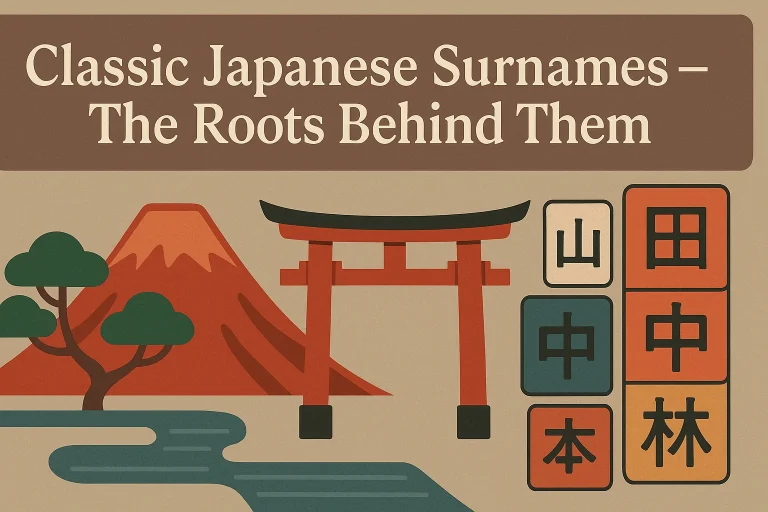
Japanese Last Names
- Sato – “helpful wisteria; assistant of the Fuji clan”
- Suzuki – “bell tree; ringing tree” (often linked to rice cultivation)
- Takahashi – “high bridge”
- Tanaka – “middle of the rice field”
- Watanabe – “ferry crossing; edge of the bay”
City or Town Names
- Shibuya – “bitter valley”; a famous district in Tokyo known for fashion and youth culture
- Harajuku – “meadow of the original dwelling”; a Tokyo area known for street fashion and pop culture
- Kyoto – “capital city”; Japan’s historic imperial capital
- Osaka – “large hill” or “great slope”; a major port city known for commerce and food culture
Village Names
- Shirakawa – “white river”; also a historic district and surname connected to clear rivers and traditional Japanese heritage
- Takayama – “tall mountain” or “high mountain”; known for its scenic mountain town and preserved old streets
- Gokayama – “five valleys”; a UNESCO World Heritage village famous for its traditional gasshō-style houses
These regional names help you place your character in a specific cultural or historical setting.
How To Use The Japanese Name Generator?
A Japanese name generator functions like a GPT-powered AI chat, analyzing prompts, meanings, and cultural patterns to produce fitting name ideas. Because it’s pre-trained, it already understands Japanese naming systems and instantly gives you relevant suggestions.
How It Works?
- You enter a prompt such as “female warrior name” or “peaceful boy name.”
- The chatbot returns several options using authentic Japanese meanings.
- You refine with follow-up prompts, like “make it nature-themed” or “use two kanji.”
- The AI’s built-in mission is to help you brainstorm authentic, rich ideas without needing extra guidance.
Example Prompts
- “Give me three gentle girl names inspired by flowers.”
- “Generate strong samurai-era style male names.”
- “Suggest unisex names with short pronunciations.”
The Cultural Significance Of Japanese Names
Japanese names reflect centuries of traditions, artistic expression, and linguistic nuance. Parents choose names that carry powerful symbolism, linked to nature, personality traits, or future aspirations.
Why Names Are Important?
- Many names come from natural elements, like blossoms, seasons, or weather.
- Names often represent qualities parents hope their children will embody.
- Contemporary preferences influence modern naming styles, blending old and new imagery.
Examples Showing Cultural Significance
- Aiko — symbolizes affection or love
- Haruto — often tied to sunlight or warmth
- Yui — reflects connection or gentleness
- Mei — a symbol of blessing and beauty
Even the visual representation of the kanji adds emotional depth, making names more than mere labels.
Structure Of Japanese Names
Japanese names typically follow a surname-first format, unlike Western naming conventions. They also derive meaning from their kanji.
Key Structure Rules
- Family name (surname) appears first
- Given name comes second
- Names often use one, two, or three kanji characters
- Meaning depends on combination and arrangement
- Pronunciation may shift despite identical characters
Example of Name Structure
- Tanaka Hiroshi
- Tanaka = family name
- Hiroshi = given name
- Tanaka = family name
- Sato Aiko
- Suzuki Ren
- Takahashi Yui
Each structure reflects order, clarity, and centuries of linguistic tradition.
How To Choose The Perfect Japanese Name?
Choosing the right Japanese name involves cultural awareness and careful thought. Writers and creators consider symbolism, sound, and narrative purpose.
Factors To Consider
- Meaning of the chosen kanji
- Sound & flow of the pronunciation
- Number of kanji strokes, believed by some to bring good fortune
- Gender associations or whether the name is unisex
- Historical or cultural relevance
- Whether the name matches your setting (ancient, Meiji, or modern-day)
Example Considerations
- For a peaceful character → choose names like Souta, Yuki, Ren
- For a fantasy samurai → choose Takeshi, Kenshin, Tomoe
- For a modern student → Mei, Haruto, Rina, Makoto
Generators use these elements to craft authentic and meaningful options.
The Origins And History Behind Japanese Names
Japanese names stem from centuries of cultural evolution. They blend poetic imagery and spiritual symbolism, creating identities full of nuance.
Historical Roots
- Samurai-era names referenced honor, rank, and nature
- Over time, names gained softer or more aspirational tones
- Modern names draw influence from literature, anime, and pop culture
Examples Demonstrating Historical Variation
- Ren — lotus, love, or cold depending on kanji
- Hikaru — “light,” bright and hopeful
- Souta — “peaceful and big,” modern and gentle
Names are often described as poems in miniature because of their layered meanings.
Creating Good Japanese Character Names
A good Japanese character name feels authentic, respectful, and appropriate for the story’s era, themes, and tone.
Key Tips
- Meaning matters: Choose names that match the character’s inner story.
- Be mindful of gender: Some names are gendered, others unisex.
- Match the setting:
- Jidaigeki historical dramas → Kenshin, Tomoe
- Modern slice-of-life → Yui, Haruto, Rina
- Jidaigeki historical dramas → Kenshin, Tomoe
- Use surname-first format for authenticity.
- Pick era-appropriate names for immersive worldbuilding.
For a historical samurai-themed story
- Kenshin — sword-hearted
- Tomoe — blessed with wisdom
- Takeshi — warrior
For a modern school setting
- Yuna Takahashi
- Aiko Sato
- Ren Suzuki
For anime or game characters
- Makoto — sincere (unisex)
- Nao — honest, short, modern (unisex)
- Souta — peaceful and big
Whether you’re writing a novel, manga, anime, game, or worldbuilding a fictional universe inspired by Japan, a generator helps you create characters who feel culturally grounded and emotionally memorable.
Conclusion
Choosing the right Japanese name is more than picking something that “sounds nice”—it’s about capturing the soul of a character, understanding the emotion hidden inside kanji, and reflecting the cultural roots that shape the meaning.
Whether you’re writing a dramatic manga arc, building an anime-inspired game world, or crafting a novel set in Japan, a Japanese name generator becomes a creative partner that helps you explore thousands of combinations tied to history, nature, symbolism, and personality.
A well-selected name can anchor a character’s identity. A gentle hero might carry a name like Hikaru (light), a steadfast warrior could hold the name Takeshi (warrior), and a poetic, soft-spoken character may suit Sakura (cherry blossom). These choices define tone, influence worldbuilding, and enrich emotional impact.